When Are Water-Propagated Plant Cuttings Ready for Potting Mix?
Why waiting for thick root tangles in water makes the move to potting soil harder, and how one-to-two-inch roots give cuttings the fastest start.

Rooting stem cuttings in water is a common way to propagate indoor plants. When propagating vines like Epipremnum aureum, moving rooted cuttings into potting substrate at the proper root length ensures a smooth transition to container culture.
When Should You Move Water Cuttings to Potting Substrate?
Water-propagated cuttings transition best to porous potting substrate once roots measure 1 to 2 in. (2.5 to 5 cm) long. Monitoring root length in the propagation vessel indicates when cuttings are ready for planting.
One-to-Two-Inch Roots vs. Leaving Cuttings in Water Too Long
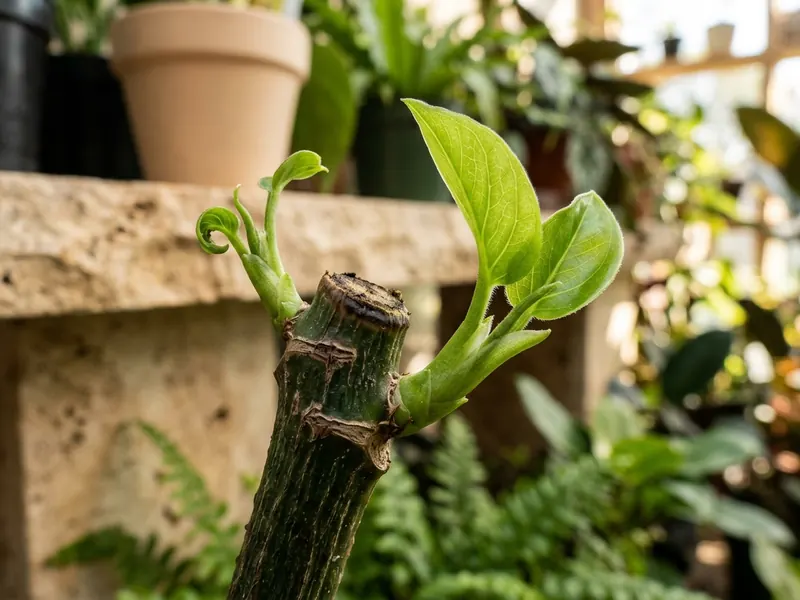
Waiting for dense water-root tangles makes the transition to soil harder, so pot cuttings into airy potting mix as soon as roots hit one to two inches.
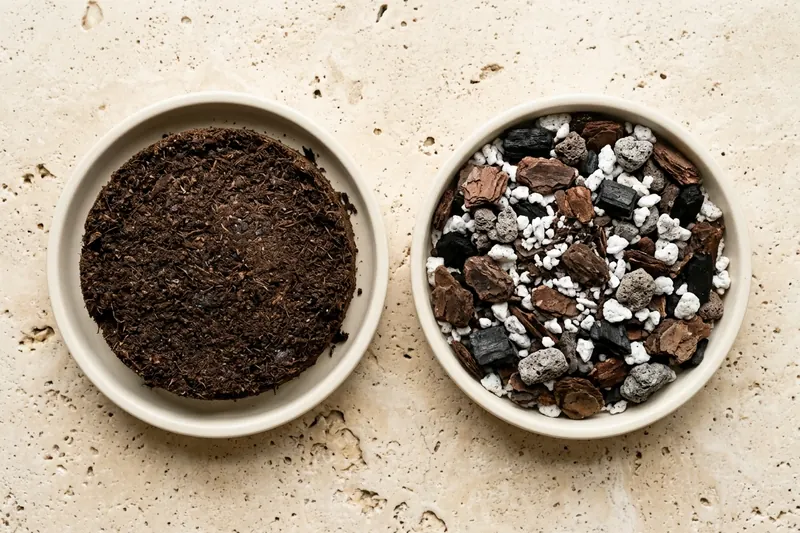
Blend 20% to 30% perlite or bark with potting soil and keep the top mix lightly moist for the first ten days as soil roots establish.
Once adventitious roots reach this 1 to 2 in. length, pot the cuttings into porous potting substrate. For established Epipremnum aureum, provide indoor light within 75 to 400 foot-candles (15 to 80 PPFD), and water when the top 50 percent of the porous mix is dry.
Where Do Adventitious Roots Form on Stem Cuttings?
Adventitious roots emerge from meristematic node tissue rather than bare internodes. When taking stem cuttings from Epipremnum aureum, make a clean pruning cut 0.25 in. (6 mm) above a leaf node using blades wiped with 70 percent isopropyl alcohol.
To protect the parent plant, remove no more than 25 to 30 percent of green foliage at one time. In the propagation vessel, refresh propagation water weekly to maintain dissolved oxygen levels as roots develop.
How Do You Care for Established Cuttings in Porous Substrate?
After transitioning cuttings to porous potting substrate, maintain appropriate environmental conditions for the species. Epipremnum aureum thrives indoors when provided with 75 to 400 foot-candles (15 to 80 PPFD) of light.
Allow the top 50 percent of the porous mix to dry before watering again. Using a porous potting substrate ensures adequate drainage and aeration for root systems.
What Pet Safety, Containment, and Hardware Cautions Apply?
According to ASPCA Animal Poison Control Center records, Epipremnum aureum contains insoluble calcium oxalate crystals that cause oral irritation, drooling, and vomiting in cats and dogs, so keep propagation vessels and vines out of reach of pets. In frost-free USDA Zones 10 to 12 (such as South Florida and Hawaii), vigorous tropical vines like Epipremnum aureum can escape cultivation and smother native tree canopies, so trimmings should be rooted indoors or bagged in household trash rather than planted outdoors or added to open yard waste piles.
For rooting stem cuttings on steel surfaces, The Plant Roast's Clinger ($35 USD) is a magnetic plant propagation station with neodymium rare-earth magnets, stem clips, and a borosilicate glass vessel. WARNING: Contains powerful neodymium rare-earth magnets; keep away from children under 14. Physical on-hand shelf stock is currently at zero, so check live made-to-order availability or join our waitlist for restock dispatches.
References
- Penn State Extension Horticulture Team (2022). Pruning, Pinching, and Propagating Indoor Houseplants by Stem Nodes. Penn State Cooperative Extension, Bulletin HORT-INDOOR-04. EXT_ID:PSU-EXT-HORT04
- ASPCA Animal Poison Control Center (2024). Toxic and Non-Toxic Plants Database: Araceae, Moraceae, Asparagaceae, Begoniaceae, Polypodiaceae, Apocynaceae, and Marantaceae. American Society for the Prevention of Cruelty to Animals (ASPCA) Veterinary Toxicology Registry. ASPCA_ID:ASPCA-APCC-PLANTS-2024
- University of Florida IFAS Assessment of Non-Native Plants (2023). Indoor Containment and Responsible Disposal of Tropical Vines (Epipremnum pinnatum / aureum & Syngonium) in Frost-Free Zones. UF/IFAS Center for Aquatic and Invasive Plants Assessment. EXT_ID:UF-IFAS-INVASIVE-EPI

