Six Unique, Conversation-Starting Houseplants Beyond Every Lobby
Tired of seeing the exact same three plants in every living room? These six weird, sculptural houseplants actually thrive indoors once you match their setup.

Once your friends have seen the exact same three big-box plants in every living room on the block, a zig-zag cactus or corky turtle-shell caudex stops dinner guests mid-sentence. Unusual plants don't have to mean fussy glass-cabinet drama as long as you match chunky bark mixes, seasonal dry rests, and filtered window light to how they actually grow in the wild. These six standout plants split neatly into three ASPCA pet-safe picks and three high-shelf collector favorites.
Which Three Weird, Sculptural Houseplants Are Safe Around Cats and Dogs?
Disocactus anguliger, Platycerium bifurcatum, and Hoya linearis are all listed as non-toxic to cats and dogs by the ASPCA, and none of them look like a standard grocery-store pothos. All three want fast-draining bark and perlite mix, or mounted sphagnum moss and bark for staghorn ferns, instead of heavy wet peat.
Three Pet-Safe Oddballs and Three Keep-Up-High Showstoppers
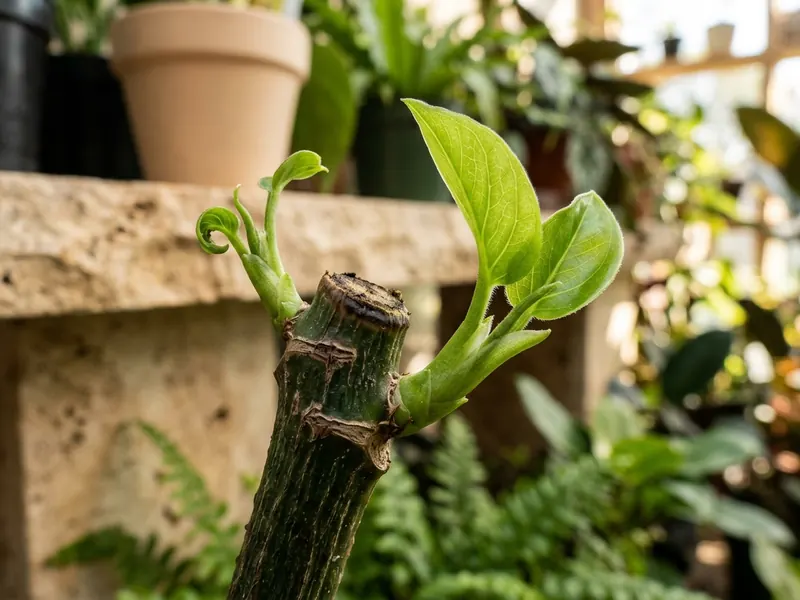
All three are listed non-toxic to cats and dogs by the ASPCA and love chunky bark-and-perlite mix.
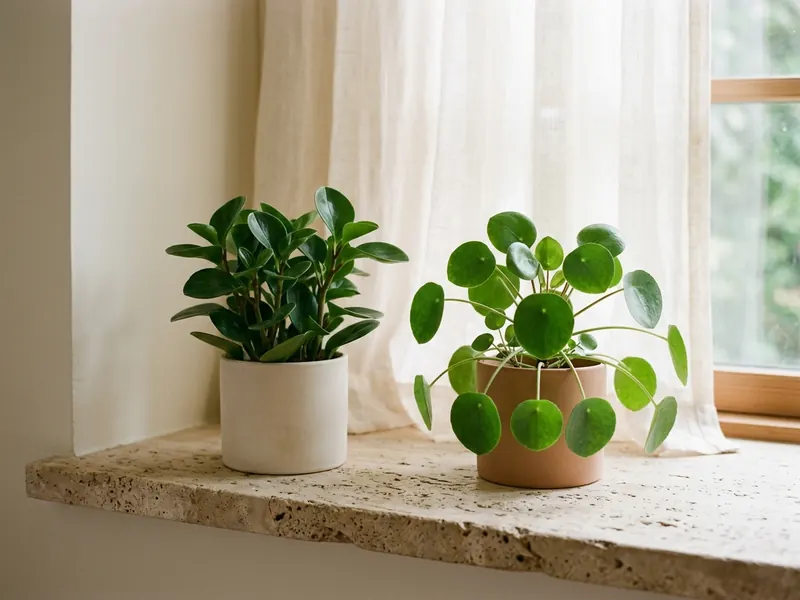
Keep these up on high shelves or wall mounts away from pets due to calcium oxalates and saponins.
Disocactus anguliger (Fishbone or Ric-Rac Cactus) sends out 18 to 36 in. notched zig-zag stems in 250 to 600 foot-candles (50 to 120 PPFD) when you let its airy mix dry 60 to 75 percent between waterings. Platycerium bifurcatum (Staghorn Fern) grows 18 to 30 in. forked antler fronds at 200 to 500 FC (40 to 100 PPFD) and loves living mounted on a board in sphagnum moss and bark soaked once it feels nearly dry and light. Hoya linearis spills down in 2 to 4 ft soft needle-leaf curtains at 250 to 600 FC (50 to 120 PPFD), ready for water once the top two-thirds of its bark-and-perlite mix dries out.
How Do You Keep Turtle-Shell Caudex Vines and Polka-Dot Begonias Happy?
Dioscorea elephantipes (400 to 900 foot-candles, or 80 to 180 PPFD) grows a 6 to 12 in. geometric woody caudex topped with a 3 to 5 ft seasonal twining vine, while Begonia maculata (250 to 500 FC, or 50 to 100 PPFD) stacks silver polka-dotted leaves up 2 to 4 ft canes. Both are way easier than they look once you nail how they like to be watered.
Water Dioscorea elephantipes lightly around the edge of the pot only while its leafy vine is actively growing, then keep the soil almost bone dry whenever that vine yellows and dies back for its natural rest period. For Begonia maculata, let the top 1 to 1.5 in. of airy mix dry out between waterings and pour right onto the soil so those spotted leaves stay dry.
What Does Alocasia 'Jacklyn' Need to Thrive in a Regular Room?
The deeply carved, textured leaves on Alocasia tandurusa 'Jacklyn' reach 2 to 3.5 ft tall indoors under 350 to 700 foot-candles (70 to 140 PPFD) when you pot it in a chunky aroid mix blended with 20 to 30 percent perlite, pumice, or orchid bark. Keep it away from cold drafts and water once the top 1.5 in. of soil feels dry so upper roots keep plenty of air.
Keep all three of those collector plants up high if you share your home with pets. Per ASPCA toxicology records, Begonia maculata (soluble and insoluble calcium oxalates concentrated in its tubers and stems) and Alocasia tandurusa 'Jacklyn' (insoluble calcium oxalates that cause mouth pain, swelling, and drooling) are toxic to cats and dogs, and Dioscorea elephantipes carries steroidal saponins.
How Does Wall Mounting Help With Tight Shelf Space and Curious Pets?
Getting trailing plants like Disocactus anguliger and Hoya linearis or pet-toxic collector plants up on the wall clears off crowded windowsills and keeps curious paws away from irritating stems. Pairing a chunky 20 to 30 percent perlite or bark mix with an overhead grow light keeps them growing steadily away from a window.
The Wallflower With Cord ($50 USD) pairs a flush-mounting self-watering wall planter and water-level indicator with an adjustable full-spectrum corded LED Light Halo that you can run on a consistent 8 to 14 hour daily light schedule with overnight dark rest. Physical on-hand shelf stock is currently at zero, so check live made-to-order availability or join our waitlist for restock updates.
References
- Chen, J., McConnell, D. B., Henny, R. J., & Norman, D. J. (2020). Cultural Guidelines for Commercial Production and Interior Acclimatization of Tropical Foliage Plants. University of Florida IFAS Extension (UF/IFAS), Bulletin ENH957 / CIR480. EXT_ID:UF-IFAS-ENH957
- Ferrarezi, R. S., Weaver, G. M., van Iersel, M. W., & Testezlaf, R. (2015). Subirrigation: Historical overview, challenges, and future prospects. HortTechnology, Vol. 25, Issue 3, pp. 262-276. DOI:10.21273/HORTTECH.25.3.262
- ASPCA Animal Poison Control Center (2024). Toxic and Non-Toxic Plants Database: Araceae, Moraceae, Asparagaceae, Begoniaceae, Polypodiaceae, Apocynaceae, and Marantaceae. American Society for the Prevention of Cruelty to Animals (ASPCA) Veterinary Toxicology Registry. ASPCA_ID:ASPCA-APCC-PLANTS-2024

