Why Do Overwatered Plants Droop Just Like Bone-Dry Ones?
Why overwatered indoor plants droop and curl just like bone-dry ones, and how a two-minute pot check stops you from drowning an already-flooded plant.

Overwatered leaves droop just as dry ones do, tricking you into pouring more water when your plants are already drowning in their own excess moisture. When Peperomia obtusifolia or Epipremnum aureum suddenly goes limp on a windowsill, your first reaction is usually to grab the watering pitcher and soak the pot. But wilted leaves only tell you that the foliage ran out of water, not why the roots stopped sending it up. Feeling the weight of the pot and checking down into the root zone tells you right away whether your plant needs a long drink or room to breathe.
Why Do Drowning Roots Make Leaves Go Soft and Droop?
When soil stays waterlogged, air spaces collapse and prevent roots from absorbing oxygen. Without fresh oxygen, fine root hairs suffocate and can no longer draw water up into the stems, leaving leaves just as limp and floppy as if the pot were bone dry.
Telling Flooded Roots Apart From Thirsty Soil
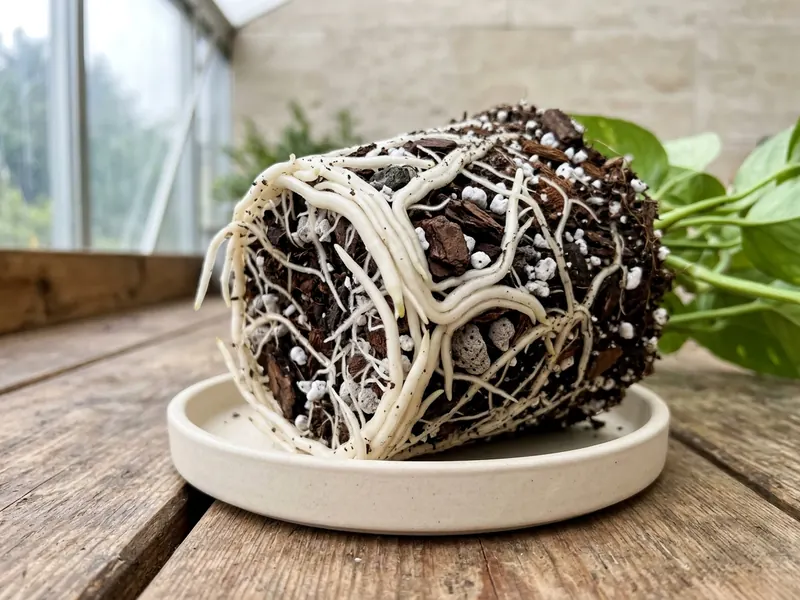
If the pot feels heavy and the lower soil is damp, your drooping plant cannot breathe. Adding more water makes root rot worse.
When the pot is feather-light and a wooden skewer comes out completely dry, thirsty leaves perk back up within hours of a thorough drink.
Healthy plants rely on continuous root-zone air to drive water absorption across cell walls. Under normal conditions, indoor favorites like Peperomia obtusifolia (happy in 150 to 450 foot-candles, or 30 to 90 PPFD, growing 8 to 12 in. tall) store water in thick, semi-succulent leaves. When soggy potting mix blocks oxygen diffusion, those roots fail and the fleshy leaves lose their internal water pressure. Pouring more water onto a flooded pot only speeds up root rot, turning what looked like thirst into a fatal mistake.
What Happens to Trapped Water at the Bottom of a Pot?
Even after excess drainage drains out through the saucer, fine potting soil holds a soggy band of trapped water at the bottom of the container. That soggy bottom zone, known as a perched water table, drops air-filled space below 10 percent and cuts off oxygen diffusion to lower roots.
Because fine peat holds onto water tightly, roots sitting in that bottom soaked zone quickly suffocate and turn mushy and dark. Meanwhile, the top inch of soil might look pale and feel completely dry under living-room lights. If you water based solely on surface dry-down, you keep the lower root ball permanently submerged in stagnant moisture. Checking soil moisture 2 to 3 inches down or inserting a clean wooden skewer all the way to the base reveals whether moisture is still trapped underneath.
How Do You Revive a Drooping Plant Without Rotting the Roots?
Lifting the pot gives you an instant diagnostic read before you ever touch a watering can. If the pot feels heavy and waterlogged, let the container dry out and aerate the root ball, but if the pot feels feather-light, give it a thorough, slow drink.
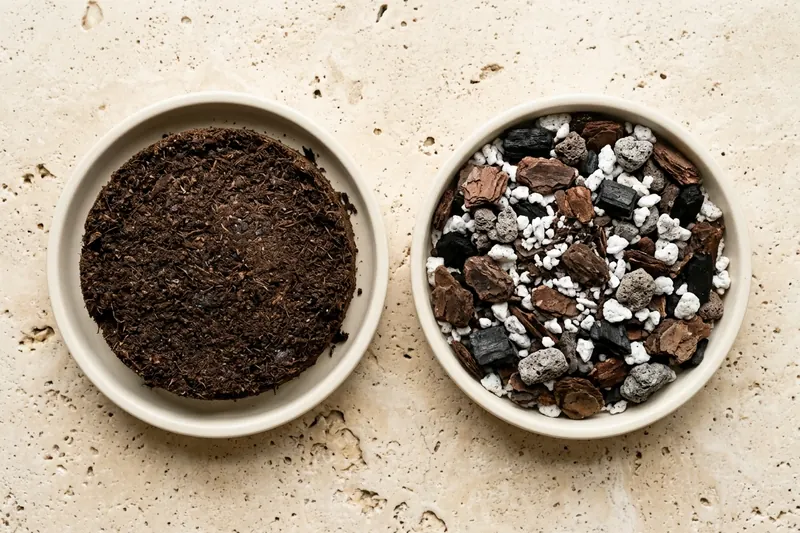
For an overwatered plant in dense, soggy peat, slide the root ball out of the pot to inspect the roots. Snip away any mushy, dead root strands with clean shears, then replant into a fast-draining potting mix blended with 20 to 30 percent coarse perlite, pumice, or fine orchid bark. That chunky amendment restores permanent air channels so oxygen flows freely around new root growth. Never add gravel or rocks to the bottom of the pot, because bottom rocks do not improve drainage and actually push the saturated water zone higher into healthy roots.
Which Drooping Houseplants Are Safe Around Cats and Dogs?
According to ASPCA Animal Poison Control Center records, Peperomia obtusifolia is non-toxic to cats and dogs, making it a worry-free choice for low credenzas and low side tables. In contrast, common trailing plants like Epipremnum aureum contain insoluble calcium oxalate crystals that cause mouth irritation, drooling, and vomiting in pets, so keep toxic vines on high shelves out of paw reach.
When you want steady, measured bottom wicking paired with a chunky 20 to 30 percent perlite or fine bark mix, The Plant Roast's Side-Eye ($35 USD) is an asymmetrical 4-inch self-watering PLA planter 3D-printed in the USA with an internal reservoir and floating water-level indicator. Physical on-hand shelf stock is currently at zero, so check live made-to-order availability or join our waitlist for restock dispatches.
References
- Passioura, J. B. (2006). The perils of pot experiments. Functional Plant Biology, Vol. 33, Issue 12, pp. 1075-1079. DOI:10.1071/FP06223
- Chalker-Scott, L. (2019). The Myth of Drainage Material in Container Plantings. Washington State University Cooperative Extension Horticultural Myths Series. EXT_ID:WSU-EXT-DRAINAGE-01
- Ferrarezi, R. S., Weaver, G. M., van Iersel, M. W., & Testezlaf, R. (2015). Subirrigation: Historical overview, challenges, and future prospects. HortTechnology, Vol. 25, Issue 3, pp. 262-276. DOI:10.21273/HORTTECH.25.3.262
- ASPCA Animal Poison Control Center (2024). Toxic and Non-Toxic Plants Database: Araceae, Moraceae, Asparagaceae, Begoniaceae, Polypodiaceae, Apocynaceae, and Marantaceae. American Society for the Prevention of Cruelty to Animals (ASPCA) Veterinary Toxicology Registry. ASPCA_ID:ASPCA-APCC-PLANTS-2024

